
Melasma vs. Sun Spots: A Thoughtful Guide for Palm Beach Gardens
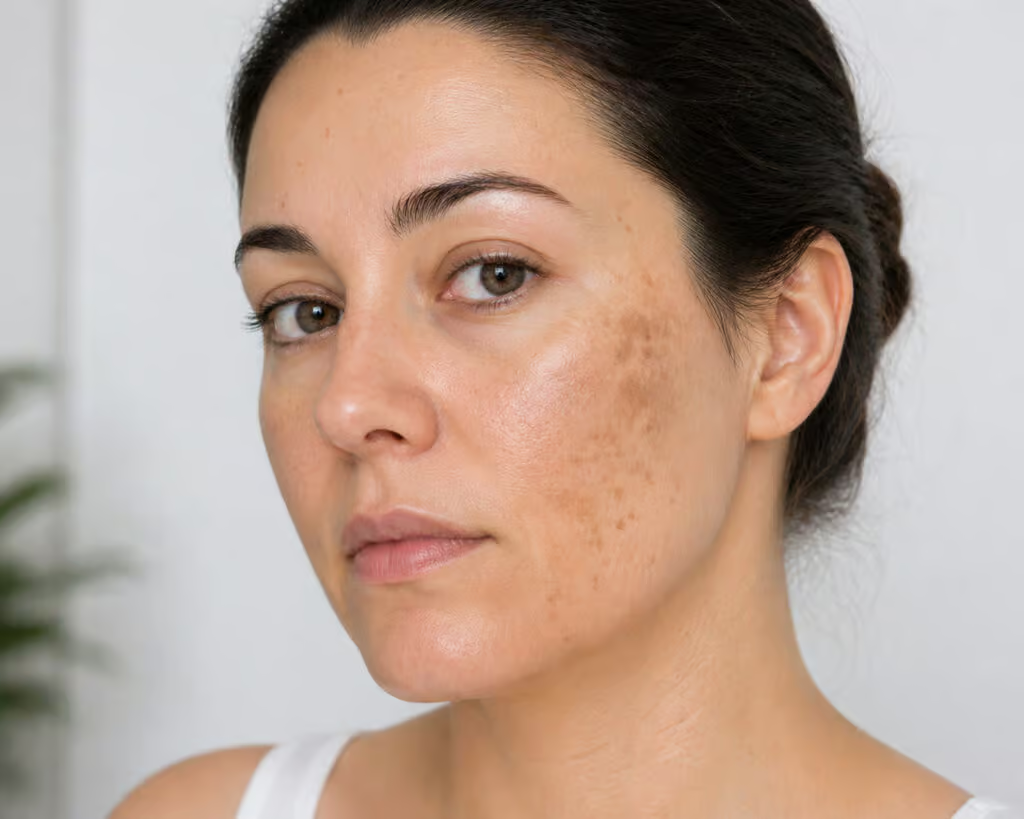
A more even complexion starts with understanding what is causing the discoloration. A few distinct brown spots and broader patches across the cheeks can look similar at first glance, yet they may call for different care. For patients considering skin rejuvenation in Palm Beach Gardens, that distinction matters before choosing a peel or laser treatment.
At Luxe Arte Aesthetics, thoughtful, physician-led planning supports a simple goal: refined, natural-looking improvement that respects your skin. The first step is an appropriate evaluation, with dermatology assessment when a diagnosis needs to be established.
Melasma and Sun Spots: What Is the Difference?
Melasma: a recurring pattern of pigmentation
Melasma often appears as flat brown or gray-brown patches on both sides of the face, especially the cheeks, forehead, and upper lip. Sun exposure and hormonal influences, including pregnancy or hormonal medications, can contribute. It may fade and return, so successful care usually includes ongoing maintenance rather than a promise of permanent removal.
Learn more: American Academy of Dermatology, Melasma overview: https://www.aad.org/public/diseases/a-z/melasma-overview
Sun spots: localized signs of cumulative UV exposure
Sun spots, also called solar lentigines or age spots, are usually individual flat pigmented marks on sun-exposed areas such as the face and hands. They develop with accumulated ultraviolet exposure. Confirmed solar lentigines are benign and do not require cosmetic treatment, although some people choose to soften their appearance.
Source: DermNet, Solar lentigo: https://dermnetnz.org/topics/solar-lentigo
A third possibility: marks left after inflammation
Acne, irritation, or skin injury can leave post-inflammatory hyperpigmentation. These marks appear where the inflammation occurred and may darken with sun exposure. A person can have more than one type of pigmentation at the same time; appearance alone is not a reliable home diagnosis.
Source: DermNet, Post-inflammatory hyperpigmentation: https://dermnetnz.org/topics/postinflammatory-hyperpigmentation
Why an Evaluation Comes Before Cosmetic Treatment
Not every brown spot is harmless. A dermatologist should assess suspected age spots before cosmetic treatment, particularly a new or changing lesion, an irregularly colored spot, or an area that bleeds or does not heal. Treating an undiagnosed lesion with a fading product or procedure can delay recognition of skin cancer.
Bring your skincare list, medication history, prior treatment details, and any history of pigment changes after procedures. Discuss pregnancy or breastfeeding before considering pigment medications or elective procedures. Do not stop prescribed medication on your own.
Source: American Academy of Dermatology, What can get rid of age spots?: https://www.aad.org/public/cosmetic/age-spots-marks/get-rid-spots
Why the Treatment Plan May Be Different
For melasma, care often begins with sun protection and clinician-selected topical treatment. A dermatologist may consider prescription hydroquinone, a combination prescription cream, or other topical options according to your history and skin tolerance. Procedures can be added in selected cases, but a laser or peel is not automatically the best first step. Discuss these options with a dermatologist experienced in treating melasma and your skin tone.
Results take time. The American Academy of Dermatology notes that melasma improvement may take 3–12 months, sometimes longer. A maintenance plan is often needed, and outcomes vary.
Source: American Academy of Dermatology, Melasma diagnosis and treatment: https://www.aad.org/public/diseases/a-z/melasma-treatment
For confirmed sun spots, topical products, selected lasers or light treatments, and chemical peels may be considered. The right option depends on the diagnosis, skin tone, treatment history, and willingness to allow recovery. Procedures can cause darker or lighter marks, sometimes lasting changes. More aggressive treatment does not necessarily mean a better result.
If discoloration followed acne or irritation, controlling the underlying inflammation is part of the plan. Procedures that further irritate the skin can worsen this type of pigmentation.
Daily Protection for Life in Palm Beach Gardens
Whether your routine includes golf, beach days, or outdoor errands, make sun protection a practical daily habit. Use a broad-spectrum, water-resistant sunscreen with SPF 30 or higher on exposed skin. When outdoors, reapply at least every two hours and after swimming or sweating, following the label. Add shade, a wide-brimmed hat, and protective clothing.
For melasma, a tinted sunscreen containing iron oxide can help protect against visible light, which can worsen pigmentation, particularly in darker skin tones. Choose gentle skincare; burning or stinging can signal irritation that makes dark marks worse.
Source: American Academy of Dermatology, Melasma self-care: https://www.aad.org/public/diseases/a-z/melasma-self-care
Frequently Asked Questions
Can I have melasma and sun spots together?
Yes. Different pigmentation patterns can coexist. An examination helps determine which areas need medical evaluation and which cosmetic options may be appropriate.
Will one laser session remove melasma permanently?
No treatment can guarantee permanent clearance. Melasma may recur, and procedures are considered selectively alongside sun protection and medical treatment.
Does sunscreen remove existing sun spots?
Sun protection helps limit additional UV damage and supports treatment results. It does not reliably erase established spots on its own.
What if my main goal is natural-looking improvement?
Discuss the changes that matter most to you and how much recovery time fits your life. A conservative plan can prioritize an even-looking complexion while preserving your natural skin tone, with time to assess your response before considering additional treatment.
Related Information
Related skin concerns: uneven tone, sun spots, melasma, and post-inflammatory hyperpigmentation.
Explore laser skin rejuvenation: https://www.luxearteaesthetics.com/laser-skin-rejuvenation
Explore facials and chemical peels: https://www.luxearteaesthetics.com/facials-chemical-peels
These service links explain general treatment options; they do not imply that every treatment is appropriate for melasma or an undiagnosed pigmented lesion.
Related reading: Choosing the Right Facial and Skincare Products: https://www.luxearteaesthetics.com/blog/345290bf-77c5-4612-a998-cc202fb00218
Ready to Learn More?
Begin with a personalized consultation at Luxe Arte Aesthetics, 2539 Burns Road, Palm Beach Gardens, FL 33410. We welcome patients from Palm Beach Gardens, Jupiter, and North Palm Beach seeking thoughtful aesthetic care and natural-looking results. Call (561) 532-4321 to discuss your goals and the appropriate next step.
Book a Consultation: https://www.luxearteaesthetics.com/book?service=In-Person%20Facial%20Consultation
This article provides general education and does not replace an individualized medical evaluation. Treatment suitability and results vary.
Related reading
Ready to Learn More?
Schedule a consultation to discuss your aesthetic goals and discover which treatments are right for you.
Book ConsultationMore Articles